Your gift is 100% tax deductible.

Prevent 6 Cancers with the HPV Vaccine
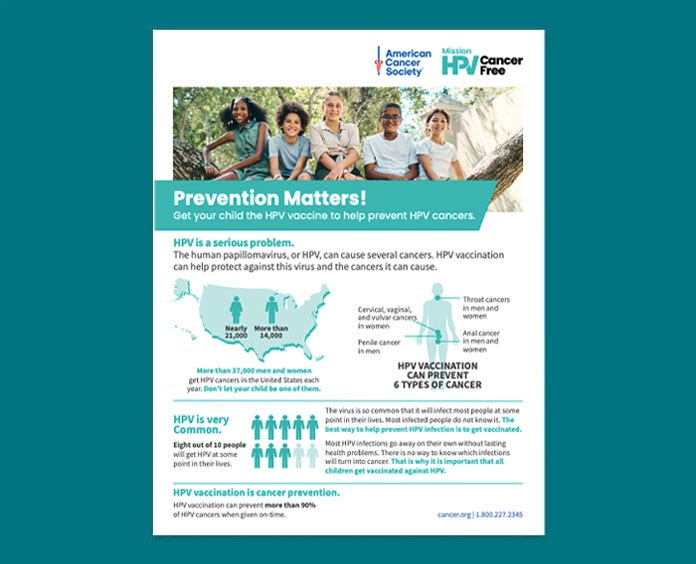
- HPV, or human papillomavirus, is a common virus that can cause 6 types of cancer. More than 30,000 new HPV cancers are diagnosed in the United States every year.
- The HPV vaccine can protect your child's future health by helping to prevent these cancers later in life.
- The HPV vaccine is safe, works well, and provides long-lasting protection against HPV cancers.
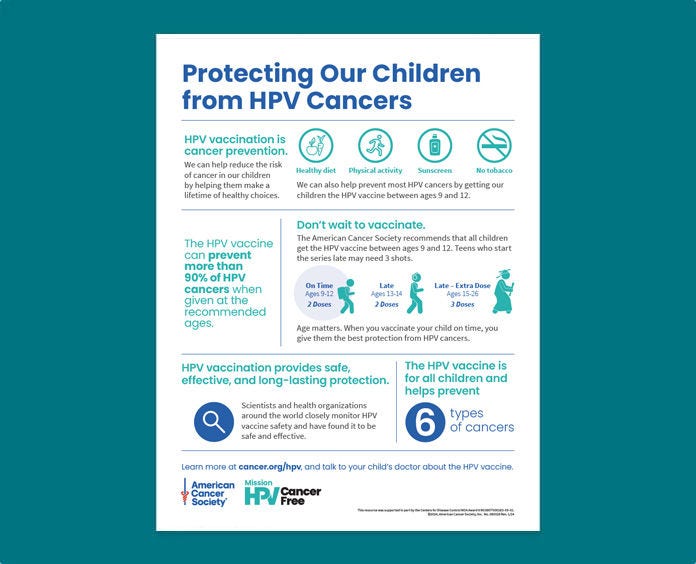
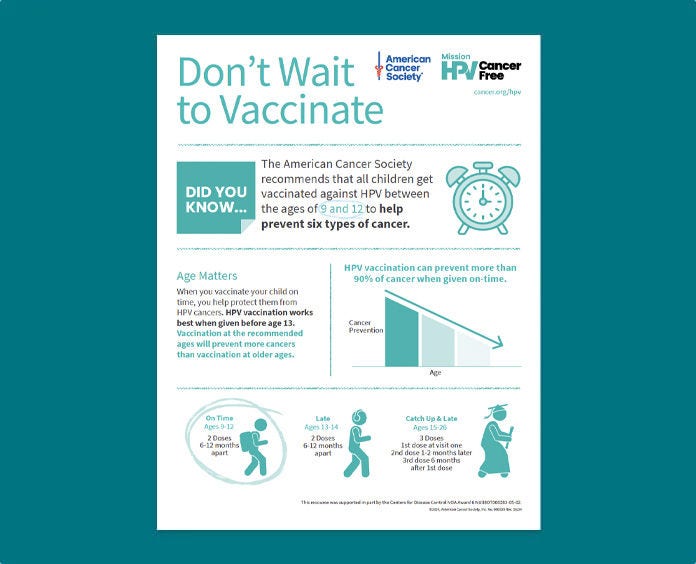
- The American Cancer Society recommends vaccinating boys and girls between ages 9 and 12 to help prevent more than 90% of HPV cancers when they are older. Teens and young adults ages 13 through 26 who have not been vaccinated, or who have not gotten all recommended doses, should get vaccinated as soon as possible.
- Vaccination of young adults will not prevent as many HPV cancers as vaccination of children and teens.

Understand the Facts
Learn about HPV, HPV cancers, and how the HPV vaccine prevents certain cancers. Write down any questions or concerns you have.
Start the Conversation
Ask your child’s doctor or nurse about the HPV vaccine through their patient portal or at your child’s next well visit. Bring a list of your questions and concerns to talk about during the visit.
Don’t Wait to Vaccinate
HPV vaccination works best when children get it between ages 9 and 12 years. Getting vaccinated during the recommended ages gives children the best protection against HPV cancers.
The Truth About HPV

More than 39,000 new HPV cancers are diagnosed in the US every year.

HPV is very common. At least 8 out of 10 people will get HPV at some point in their lives. Latest reports show almost 43 million people in the US have HPV.
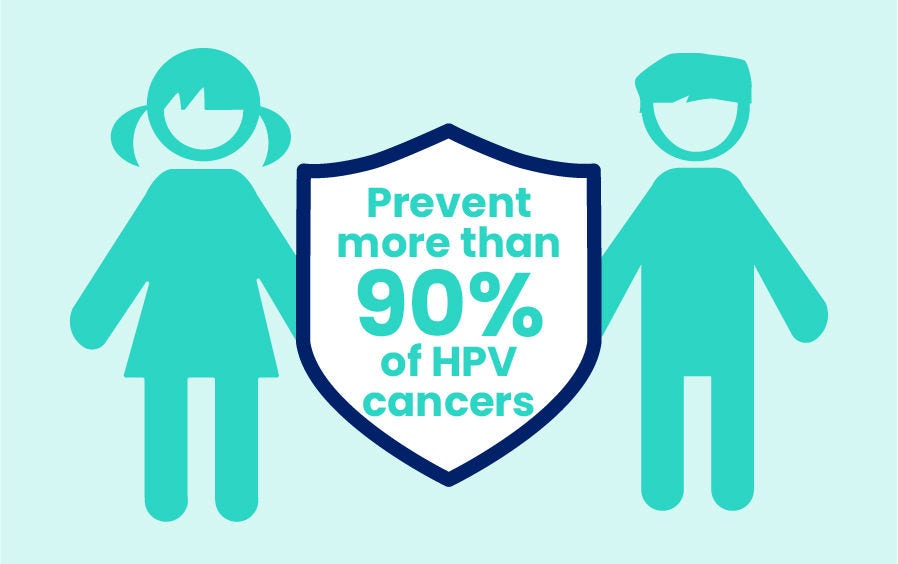
HPV vaccination can prevent more than 90% of HPV cancers when given at the recommended ages.



Educational Materials
Download these materials to learn more about the HPV vaccine and how it can help protect your kids.
American Cancer Society Cervical Cancer and HPV Vaccine Guidelines
Learn more about the American Cancer Society’s HPV vaccine use guidelines and commitment to eliminate cervical cancer.